DrumPitchPro
Drum and timpani tuner
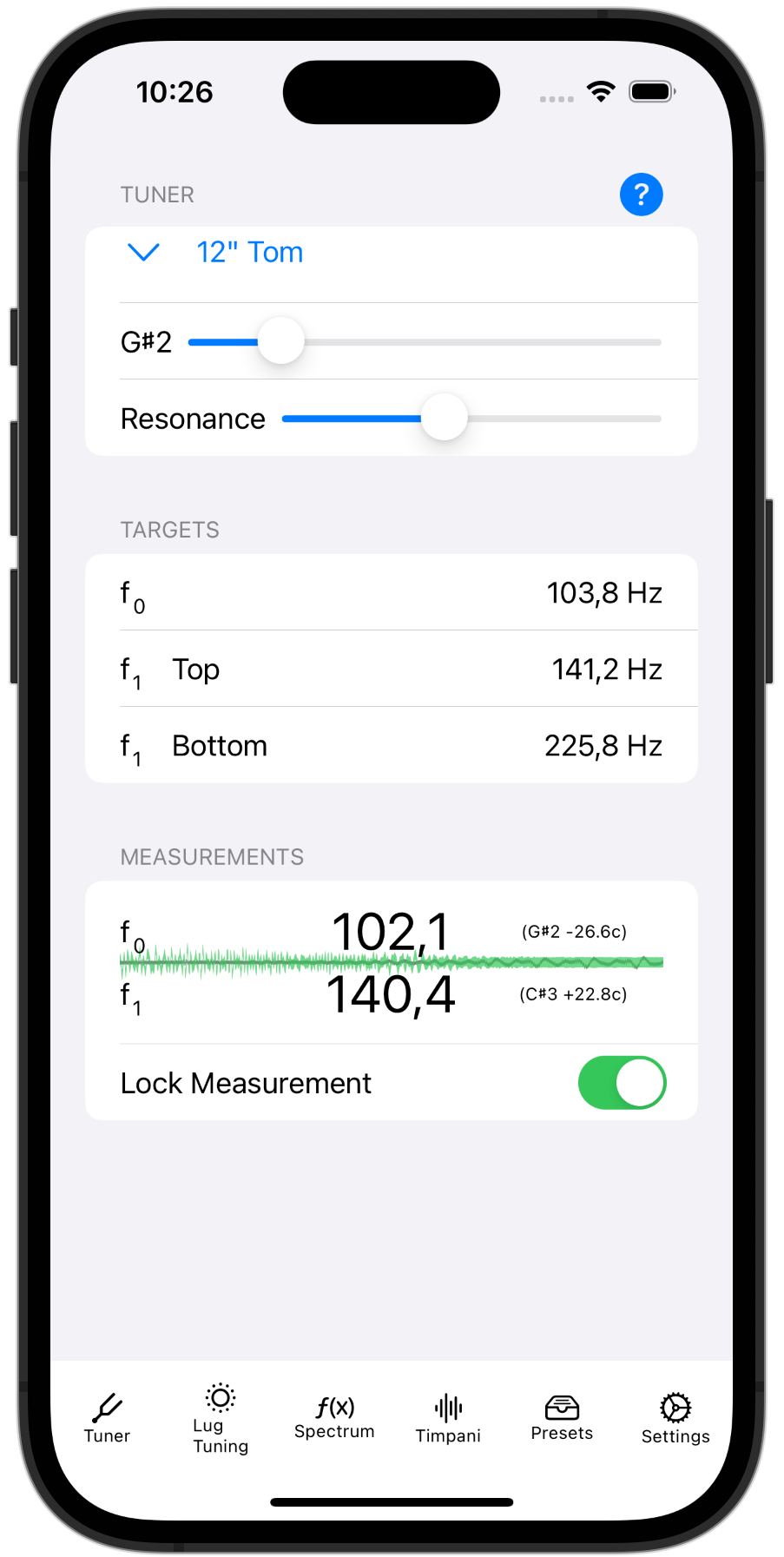

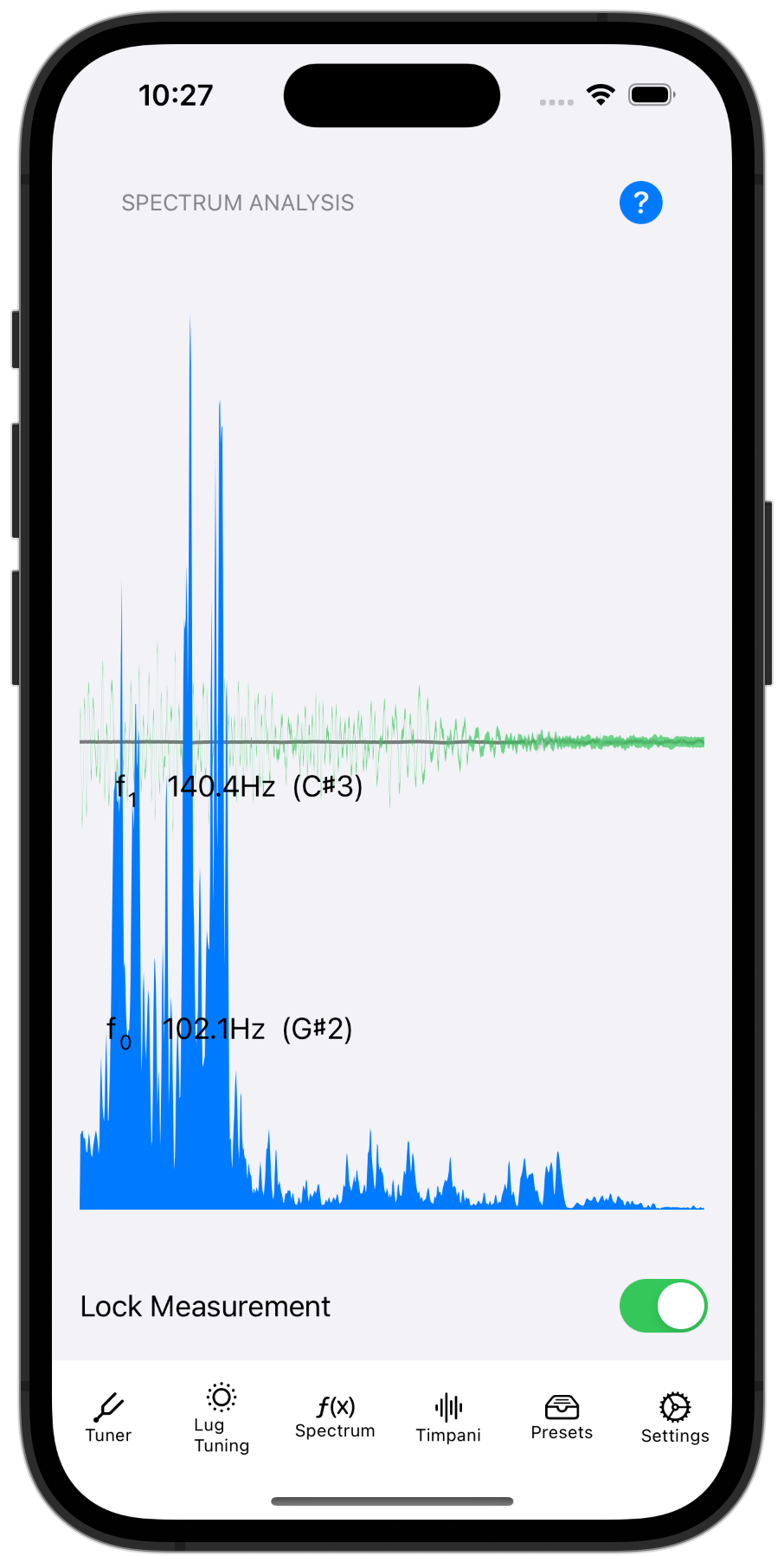
Features
- iPhone or iPad
- Drum tuning mode
- Lug pitch tuning
- Spectrum analysis
- Timpani tuner
- Presets
How to Tune a Drum
1. Gather the Necessary Tools
- Drum key: A small tool used to adjust the tension rods.
- Drumstick/mallet: Useful for tapping the drumhead during tuning.
- DrumPitchPro for precise tuning.
2. Understand the Drum Parts
- Drumhead: The top (batter) and bottom (resonant) heads.
- Tension rods: Screws around the drum that control the tension of the drumhead.
- Hoop/Rim: The metal ring that holds the drumhead in place.
- Shell: The body of the drum.
3. Prepare the Drum
Loosen all the tension rods using the drum key. Remove the drumhead if necessary to clean the bearing edge (the edge where the drumhead meets the shell) and ensure it's free of dust or debris. Reinstall the drumhead if removed and place the hoop over it.
4. Finger-Tighten the Tension Rods
Tighten each tension rod by hand until it is snug against the hoop. Work in a star-shaped pattern (opposite pairs) to ensure even tension.
5. Bring Your Drum Roughly in Tune
Do this for both the batter head and the resonant head:
- Use the drum key to turn each tension rod a quarter turn in a star pattern.
- Tap the drumhead in the middle and tighten the rods to achieve your desired base pitch.
- Tap the drumhead near each tension rod and roughly match the edge pitch at all points. This ensures an even tension of the drum membrane.
- Repeat the process until you achieve the desired pitch for the batter head and the resonant head.
- Use DrumPitchPro for easy measuring of the base and edge pitch.
6. Finetune the Resonant Head (Bottom)
Hit the bottom head near each lug and measure the edge frequency. Adjust the tension rods until all lug frequencies have the same pitch. Use DrumPitchPro for easy measuring of the edge pitch.
7. Finetune the Batter Head (Top)
Follow the same process as with the resonant head, but aim for a slightly lower tension than the resonant head for a balanced sound.
8. Check for overtones
- Hit the drum in the center to check for unwanted overtones or "ringing." Adjust the tension slightly or use dampening tools if necessary.
- Play the drum with other drums in your kit to ensure it blends well. Adjust as needed for the perfect tone.
9. Experiment with Tension Ratios
- Higher tension on the resonant head: Produces a shorter, more focused sound.
- Higher tension on the batter head: Produces a deeper, more open sound.
10. Practice Regularly
Tuning takes practice, so don't worry if it doesn't sound perfect right away. Over time, you'll develop an ear for what sounds best.
Tutorial video
Privacy policy
DrumPitchPro does not collect any personal data.